
Introduction
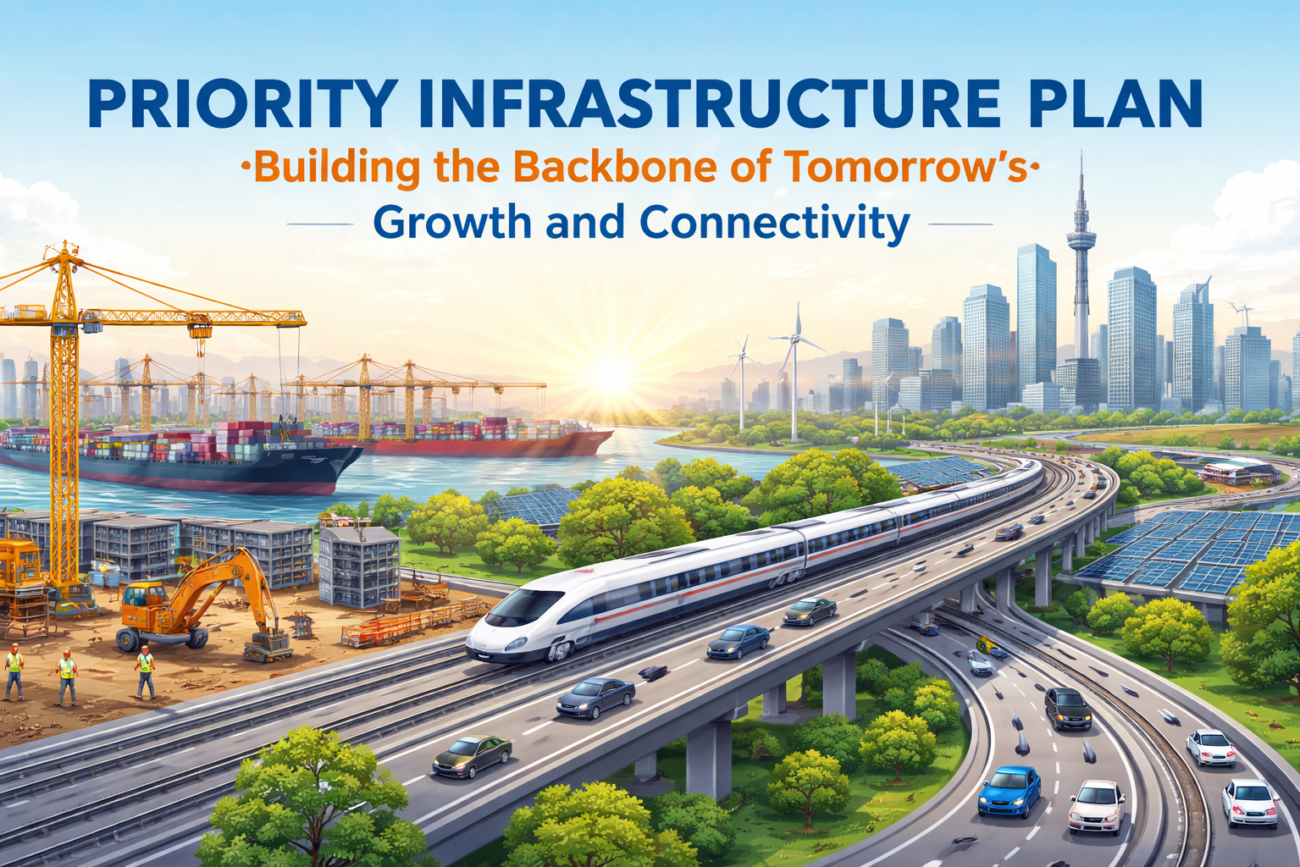
Infrastructure has always been the foundation upon which societies grow and thrive. From roads and bridges to digital networks and energy systems, it shapes how people live, work, and connect. A Priority Infrastructure Plan represents a strategic approach to strengthening these essential systems, ensuring that they are capable of supporting future demands. It is not just about construction—it is about vision, planning, and sustainable development.
In a rapidly changing world, the need for robust infrastructure has become more critical than ever. Population growth, urbanization, and technological advancement all place increasing pressure on existing systems. A well-designed infrastructure plan addresses these challenges by prioritizing projects that deliver the greatest impact, creating a strong backbone for economic growth and social progress.
The Purpose of a Priority Infrastructure Plan
At its core, a Priority Infrastructure Plan is designed to identify and implement projects that are essential for development. It focuses on allocating resources efficiently, ensuring that critical areas receive the attention they need. This approach helps governments and organizations make informed decisions, balancing immediate needs with long-term goals.
The purpose extends beyond functionality. Infrastructure influences quality of life, accessibility, and economic opportunity. By prioritizing key projects, the plan ensures that communities benefit from improved connectivity, reliable services, and enhanced living conditions. It creates a framework where development is both strategic and inclusive.
Driving Economic Growth and Development
One of the most significant impacts of a Priority Infrastructure Plan is its ability to drive economic growth. Infrastructure projects create jobs, stimulate investment, and support industries by improving efficiency and accessibility. From transportation networks that facilitate trade to energy systems that power businesses, these developments are essential for economic progress.
Moreover, strong infrastructure attracts investment by creating a stable and reliable environment for businesses. Investors are more likely to commit resources in regions where transportation, communication, and utilities are well-developed. This creates a positive cycle of growth, where infrastructure development leads to increased economic activity and further opportunities.
Enhancing Connectivity and Mobility
Connectivity is a key focus of any infrastructure plan, as it directly impacts how people and goods move. Efficient transportation systems reduce travel time, improve accessibility, and enhance productivity. Whether it is highways, rail networks, or public transit, these systems play a crucial role in connecting communities and enabling growth.
Digital connectivity is equally important in today’s world. High-speed internet and communication networks are essential for education, business, and innovation. A Priority Infrastructure Plan recognizes this need, integrating digital solutions alongside physical infrastructure to create a comprehensive and interconnected system.
Sustainability and Future-Ready Design
Modern infrastructure planning must consider sustainability as a central principle. A Priority Infrastructure Plan emphasizes the use of environmentally friendly materials, energy-efficient systems, and designs that minimize environmental impact. This approach ensures that development does not come at the expense of natural resources.
Future-ready design is another critical aspect. Infrastructure must be adaptable to changing needs and emerging technologies. By incorporating flexibility and resilience into planning, the plan ensures that systems remain effective over time. This forward-thinking approach reduces the need for costly upgrades and supports long-term sustainability.
Overcoming Challenges in Implementation
Implementing a Priority Infrastructure Plan is not without challenges. Issues such as funding, regulatory requirements, and coordination between stakeholders can complicate the process. Effective planning and collaboration are essential to overcoming these obstacles and ensuring successful execution.
Public engagement also plays a vital role. Communities must be involved in the planning process to ensure that projects meet their needs and expectations. By fostering transparency and communication, planners can build trust and support, making it easier to implement projects and achieve desired outcomes.
The Role of Innovation and Technology
Innovation and technology are transforming the way infrastructure is planned and developed. Advanced tools such as data analytics, smart systems, and automation enable more efficient and accurate decision-making. These technologies help identify priorities, optimize resources, and improve overall performance.
Smart infrastructure, for example, integrates technology into systems to enhance functionality. From intelligent traffic management to energy-efficient buildings, these innovations improve efficiency and user experience. A Priority Infrastructure Plan leverages these advancements to create systems that are not only effective but also responsive to changing needs.
FAQs
1. What is a Priority Infrastructure Plan?
It is a strategic framework for identifying and implementing essential infrastructure projects to support growth and development.
2. Why is infrastructure important for economic growth?
It improves efficiency, attracts investment, and supports industries, leading to increased economic activity.
3. How does infrastructure enhance connectivity?
By developing transportation and digital networks that link communities and facilitate communication and trade.
4. What role does sustainability play in infrastructure planning?
It ensures that development minimizes environmental impact and supports long-term resource management.
5. How can challenges in implementation be addressed?
Through effective planning, stakeholder collaboration, and community engagement.
Conclusion
A Priority Infrastructure Plan is more than a collection of projects—it is a vision for the future. By focusing on strategic development, it creates systems that support economic growth, enhance connectivity, and improve quality of life. Its emphasis on sustainability and innovation ensures that infrastructure remains relevant and effective in a changing world.
